The Top Practice Management Software Platforms for Growing Practices in 2026
Your practice management software has a surprisingly large say in how your day goes. When scheduling, eligibility, claims, payments, and reporting live in different places, a five-minute task can turn into five tabs, three logins, and a message to someone in billing. Denied claim amounts climbed across nearly every category last year, from Medicare Advantage claims to routine coding denials. On the staffing side, a report found that 40% of practices now need three or more full-time administrative staff per physician just to keep up with payer paperwork.
It's no surprise practices are searching for the top practice management software available right now to improve their overall practice performance. The practice management software market reflects that shift: An industry analysis projects the practice management system market will grow from roughly $12.7 billion in 2025 to nearly $29 billion by 2034.
This list breaks down the top medical practice management software options for 2026, what separates a strong practice management system from a mediocre one, and why billrMD keeps landing at the top for growing independent practices, billing companies, and labs.
See billrMD in Action
What to Look for in a Practice Management System
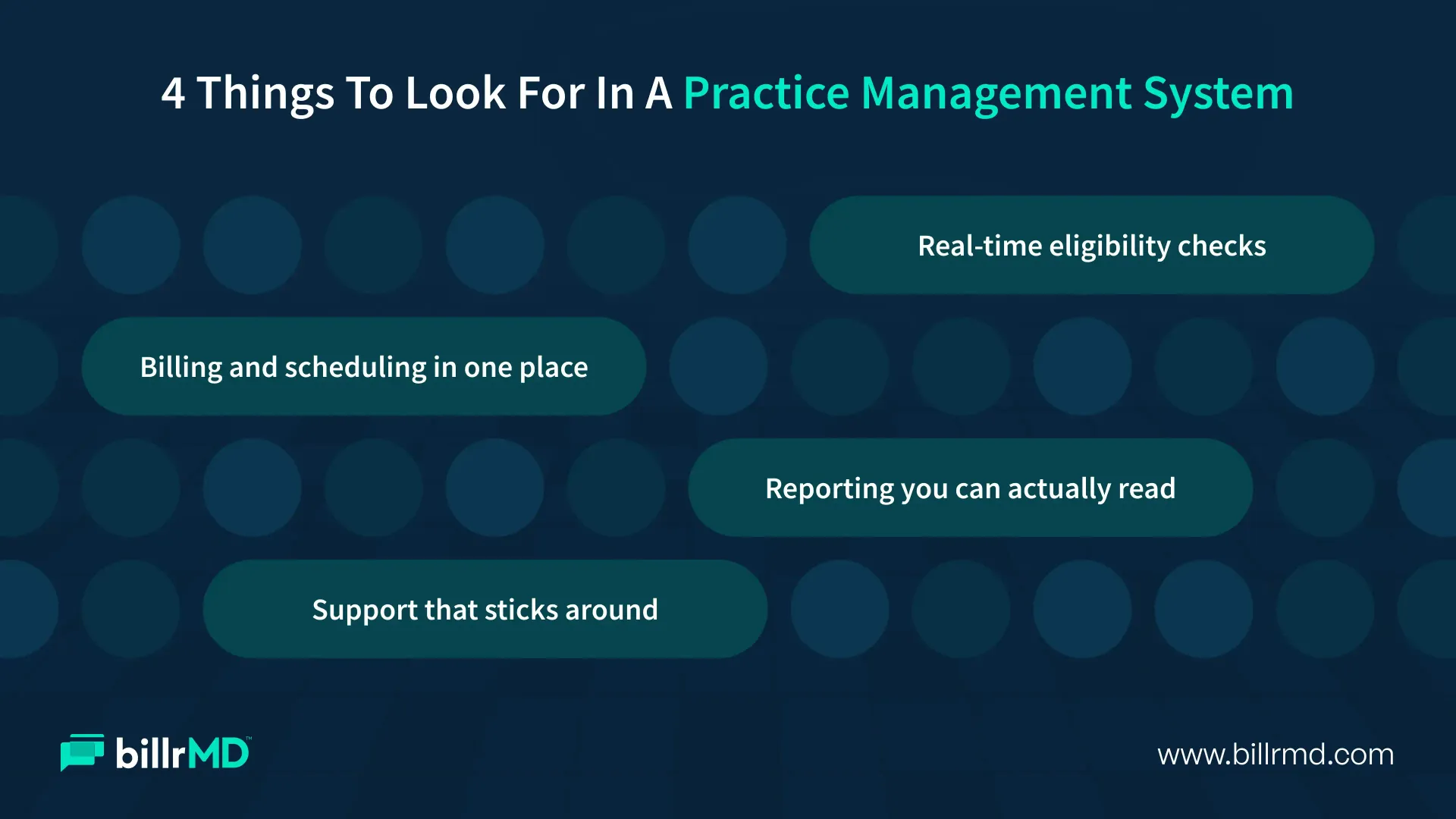
Before you compare practice management software companies, it helps to know what matters. A strong practice management system should give you real-time eligibility checks, billing and scheduling that live in one place instead of three, reporting you can actually read, and support that sticks around after the contract is signed. Our
complete guide to practice management software breaks this down in more detail if you're just getting started.
Top Practice Management Software Platforms in 2026
1. billrMD
billrMD is a web-based practice management and medical billing platform with cloud capabilities. It is built for small to midsize practices, billing companies, and labs and IDTFs that want the best tools without the price tag or the learning curve. It combines scheduling, automated appointment reminders, patient invoicing, electronic claims submission, and real-time financial reporting into one login, so staff doesn't have to jump between disconnected tools to complete a single patient visit.
Best for: Growing independent practices, billing companies, and labs or IDTFs looking for an affordable, scalable practice management platform.
2. AdvancedMD
AdvancedMD is a longtime player in the space, offering practice management, EHR, and telemedicine tools under one roof. It's a good fit for multi-provider groups that want deep customization and don't mind a longer setup process.
Best for: Multi-provider groups that need deeper RCM capabilities, customization, and support for complex, multi-provider workflows.
3. athenaOne (athenahealth)
athenaOne pairs practice management with a large payer rules engine, making it a solid choice for larger groups that need heavy revenue cycle depth. Smaller practices sometimes find the platform more robust, and more expensive, than they actually need.
Best for: Larger practices that prioritize extensive payer connectivity and a robust, integrated revenue cycle.
4. PracticeSuite
PracticeSuite offers scalable scheduling, billing, and reporting aimed at practices and billing companies managing multiple providers. It covers the basics well, though practices often need add-ons for more advanced automation.
Best for: Practices and billing companies managing multiple providers that need basic billing, scheduling, and reporting capabilities.
5. NextGen Healthcare
NextGen is built for larger ambulatory groups that need practice management tied closely to clinical workflows. It's capable, but its complexity and cost often outpace what most independent or growing practices need.
Best for: Larger ambulatory groups that need practice management closely integrated with clinical workflows and broader enterprise capabilities.
6. RXNT
RXNT has practice management, EHR, billing, scheduling, and patient engagement in a single platform. However, organizations looking for a more focused billing and practice management experience may want to consider more specialized options.
Best for: Smaller practices needing basic practice management and billing capabilities.
7. DrChrono
DrChrono leans into mobile-friendly scheduling and patient engagement, appealing to practices that want charting and check-in on a tablet. Billing depth and reporting tend to lag behind more established practice management software companies on this list.
Best for: Solo and small practices that value mobile-friendly workflows, integrated EHR and billing, and a slightly streamlined setup.
How We Ranked These Platforms
We looked at the features that matter most to growing practices, including scheduling, billing, claims management, reporting, patient payments, ease of use, scalability, and overall value. We also considered how well each platform serves the day-to-day needs of independent and growing practices.
What Sets billrMD Apart
What sets billrMD apart on this list is how directly it's built around the features growing practices use every day. Customizable scheduling, HIPAA-compliant user accounts with role-based permissions, and a patient portal and app that let patients pay and manage appointments on their own time. Because the platform is fully web-based, staff can access it securely from anywhere, without the server maintenance that weighs down older systems. For practices that have outgrown a legacy system, billrMD's practice management platform scales without the usual growing pains.
Conclusion
The right practice management system doesn't just keep a practice running; it gives growing practices, billing companies, and labs room to grow. If you're watching for
the signs it's time to switch, or want a full breakdown of the
features that matter most, we've got you covered. And once you've seen the
real benefits of switching for yourself, billrMD remains the strongest pick on this list heading into 2026.
Completely Free to Start
Frequently Asked Questions
What is practice management software?
Practice management software handles the administrative side of running a clinic, including scheduling, patient records, billing, and reporting, so staff isn't juggling separate systems for each task.
What's the difference between practice management software and an EHR?
Practice management software runs the business side of a practice, like scheduling and billing, while an EHR documents clinical care. Many practices run both side by side or fully integrated.
How much does a practice management system cost?
Pricing varies by provider count, features, and deployment type, with web-based practice management software companies typically charging per provider per month. billrMD offers a free plan to start, with paid tiers that scale as a practice grows.
Which practice management system is best for a growing independent practice?
It depends on your size and workflow, but growing independent practices, billing companies, and labs generally get the most value from a system built specifically for their scale, which is where billrMD stands out on this list.
Recent Posts