From Denials to Dollars: Best Practices for Effective Denial Management in Healthcare

In healthcare, claim denial management refers to the systematic process of identifying, appealing, and resolving denied claims to ensure practices receive the revenue they’ve earned. Almost 15% of claims submitted to private payers are initially denied. A robust denial management system doesn’t just recover those funds; it uncovers patterns, fixes root causes, and turns a reactive process into a proactive strategy.
At its core, denial management in healthcare involves tracking denied claims, analyzing the reasons for rejection, correcting errors, and resubmitting them for payment. But the most effective approaches go further: they integrate claims-denial solutions into the broader revenue cycle management (RCM) workflow, reducing denials before they occur.
Start Preventing Denials Today
Common Causes of Claim Denials in Healthcare
Understanding the common reasons for medical claim denials is the first step toward prevention. Some of the most frequent culprits include:
- Incomplete or Inaccurate Patient Information: Missing or incorrect details, such as patient demographics, insurance IDs, or policy numbers, trigger automatic rejections.
- Coding Errors: Using outdated, incorrect, or nonspecific medical codes (e.g., ICD-10, CPT) can lead to denials. Even a single digit can make the difference between approval and rejection.
- Lack of Medical Necessity: Payors often deny claims if the documentation doesn’t justify the service as medically necessary. Clear, detailed clinical notes are essential.
- Late or Missed Deadlines: Failing to submit claims within the payer’s timeframe results in instant denials. Each insurer has its own rules, and missing one means starting over.
- Duplicate Billing: Submitting the same claim multiple times, whether accidentally or due to poor tracking, can lead to automatic denials.
- Non-Covered Services: Some treatments or procedures may not be covered under a patient’s plan. Without prior authorization, these claims are often denied.
Pro Tip: Practices that use billrMD’s automated tracking are reducing these errors by up to 30%.
Types of Healthcare Claim Denials: Soft vs. Hard Denials
Not all denials are created equal. Recognizing the difference between soft denials and hard denials helps practices prioritize their response:
| Type | Definition | Recovery Potential | Example |
|---|---|---|---|
| Soft Denials | Temporary rejections, often due to minor errors or missing information. | High | Missing modifier or incomplete form |
| Hard Denials | Permanent rejections, typically due to non-compliance or lack of coverage. | Low (unless appealed) | Service not covered by payer |
Soft denials are easier to fix and resubmit, while hard denials require more effort, such as appeals, additional documentation, or adjustments to patient responsibility. A well-designed claims denial management process addresses both types efficiently.
The Impact of Denials on Revenue Cycle Management
Denials don’t just delay payments; they disrupt the entire revenue cycle management (RCM) process. Here’s how:
- Cash Flow Disruptions: Each denied claim represents unpaid revenue that must be reworked, resubmitted, or written off. For a practice processing hundreds of claims weekly, even a 5% denial rate can translate into thousands in lost revenue each month.
- Increased Administrative Costs: Appealing denials requires staff time, resources, and often, third-party intervention. The Medical Group Management Association (MGMA) estimates that reworking a single denied claim costs practices $25–$30 on average.
- Patient Dissatisfaction: Denials can lead to unexpected bills for patients, damaging trust and practice reputation.
- Operational Inefficiencies: Constantly chasing denials pulls staff away from core tasks, reducing overall productivity.
Nearly two-thirds of healthcare organizations plan to increase AI spending through 2026, and over
40% are prioritizing revenue cycle management, fueling demand for smarter denial management solutions.
How to Prevent Claim Denials in Healthcare
The secret to the most cost-effective claim denial prevention strategy lies in the name itself: Prevention. Implementing these steps minimizes denials upfront:
Verify Patient Information Upfront
Double-check insurance details, eligibility, and coverage before services are rendered. Automated eligibility verification tools can flag potential issues before claims are submitted.
Invest in Accurate Coding
Use certified coders and leverage AI-assisted coding tools to ensure accuracy. Regular audits of coding practices can catch recurring errors.
Prioritize Clean Claims
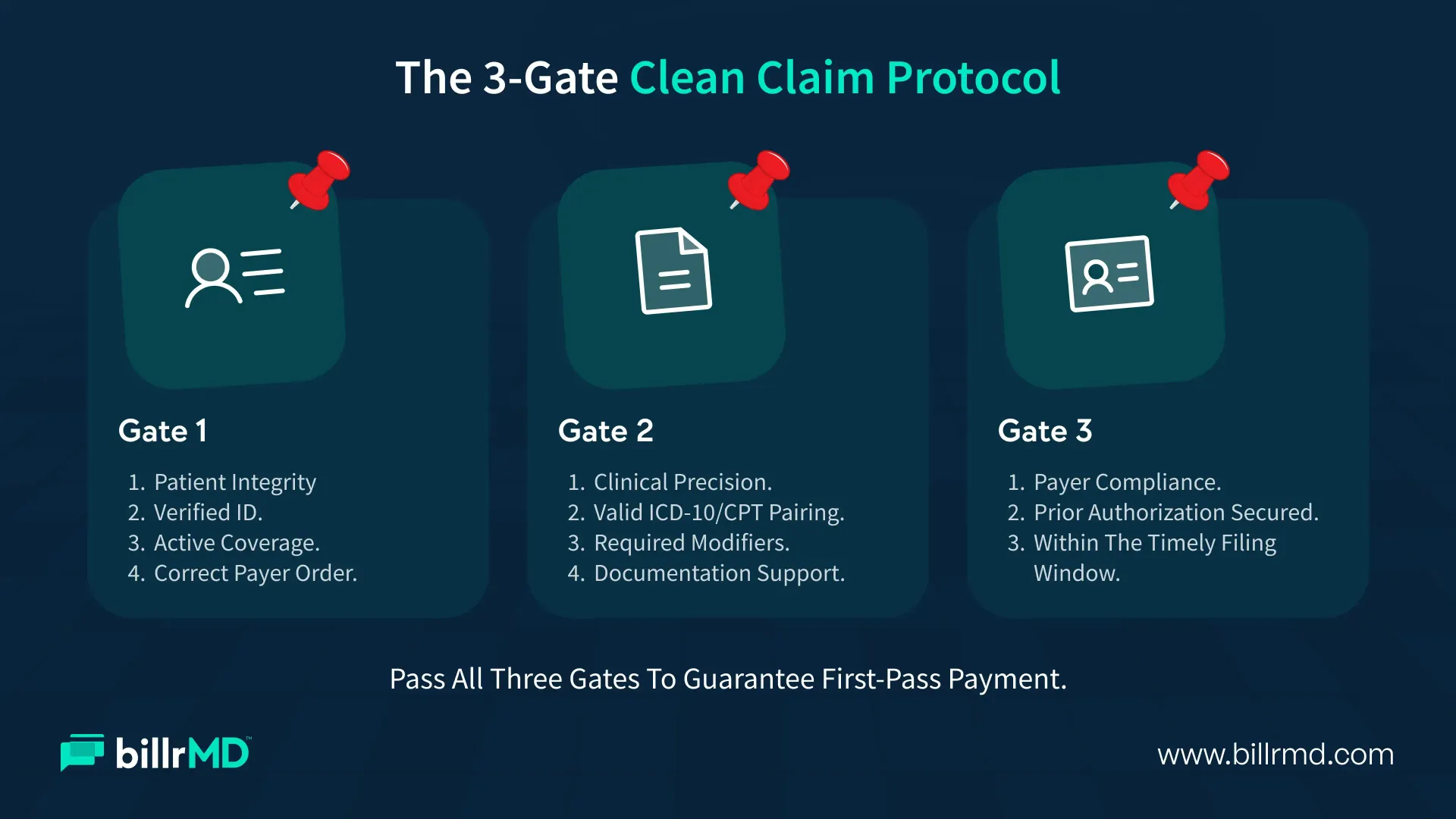
A clean claim is one that’s complete, accurate, and submitted on time. Practices with a 95%+ clean claim rate see significantly fewer denials. Train staff on payer-specific requirements to avoid common pitfalls.
Automate Denial Tracking
A denial management system with real-time tracking and analytics helps identify trends, such as a specific payer repeatedly denying a certain code. Addressing these patterns proactively reduces future denials.
Conduct Regular Staff Training
Keep your team updated on the latest coding standards, payer policies, and documentation best practices. Knowledge gaps are a leading cause of preventable denials.
Best Practices for Denial Management in Healthcare
Even with prevention efforts, denials will happen. Here’s how to handle them effectively:
Categorize Denials by Root Cause
Group denials by type (e.g., coding errors, eligibility issues) to identify systemic problems. This data-driven approach allows you to focus on high-impact fixes.
Appeal Promptly and Thoroughly
Most payers have strict deadlines for appeals, often 30–60 days. Gather all supporting documentation (e.g., medical records, prior authorizations) and craft a clear, concise appeal letter.
Leverage Technology
Modern denial management systems can:
- Automatically flag denied claims for review.
- Generate appeal letters with pre-populated fields.
- Track denial trends and recovery rates.
Example: billrMD’s denial management software integrates seamlessly with your RCM workflow, reducing the time spent on appeals by 40%.
Monitor Key Metrics
Track metrics like:
- Denial Rate: Percentage of claims denied (aim for <5%).
- Recovery Rate: Percentage of denied claims successfully appealed.
- Average Days in A/R: How long denied claims sit in accounts receivable.
Foster Payer Collaboration
Build relationships with payer representatives to clarify denial reasons and negotiate solutions. Some denials stem from miscommunication that can be resolved with a quick call.
How billrMD Simplifies Denial Management
Managing denials manually is time-consuming and error-prone. billrMD’s denial management solutions automate the heavy lifting, so your team can focus on what matters most: patient care and practice growth.
With
billrMD, you get:
- Real-Time Denial Tracking: Instant alerts for denied claims, with root cause analysis.
- Automated Appeals: Pre-filled appeal templates and one-click resubmission.
- Payer-Specific Insights: Actionable data on which payers deny most often and why.
- Seamless Integration: Works with your existing EHR and practice management systems.
- Customizable Workflows: Tailor the process to your practice’s unique needs.
Why it works: Practices using billrMD’s denial management system report a 20% reduction in denials within the first three months and a 15% increase in recovered revenue.
The Future of Denial Management
As we move further into 2026, the role of automation and artificial intelligence in billing will only grow. Payers are already
using AI to identify reasons to deny claims; providers must use the same level of technology to ensure they are paid fairly. By combining expert human oversight with cutting-edge
Practice Management Software, your practice can stay ahead of the curve and ensure that every service provided is a service paid for.
Ready to Reduce Denials and Recover More Revenue?
Frequently Asked Questions
What is denial management in healthcare?
Denial management in healthcare is the process of identifying, appealing, and resolving denied insurance claims to ensure practices receive payment for services rendered. It involves tracking denials, correcting errors, and resubmitting claims or appealing when necessary.
What are the most common reasons for medical claim denials?
Common reasons for medical claim denials include incomplete patient information, coding errors, lack of medical-necessity documentation, late submissions, duplicate billing, and non-covered services. Many of these can be prevented through a robust claims-denial management process.
What’s the difference between soft and hard denials?
Soft denials are temporary and often due to minor errors (e.g., missing information), making them easier to fix and resubmit. Hard denials are permanent rejections, usually due to non-compliance or lack of coverage, and require appeals or adjustments to patient responsibility.
How does billrMD help with denial management?
billrMD’s denial management solutions automate tracking, appeals, and reporting, helping practices reduce denials by 20% and recover more revenue. Features include real-time alerts, automated appeal templates, and payer-specific insights.
Recent Posts