8 Common Independent Medical Practice Challenges and How To Solve Them

Having the freedom to operate a medical practice independently can give you new possibilities for doing what you want to do and being free from any hospital management board’s restrictions. But with all that freedom and possibility for decision-making, one cannot forget about all the possible problems he can face while operating an independent practice, since everything is directly related to him. A smart person will know how to deal with them.
This guide covers eight of the most common independent medical practice challenges clinicians and administrators face today, along with the practice management solutions that are genuinely making a difference.
Run Your Practice Efficiently
What Is an Independent Medical Practice?
An independent medical practice is a clinic or healthcare facility that operates outside the ownership or control of a hospital, large health system, or corporate entity. These practices are typically owned by one or more physicians or a small group of healthcare professionals who choose to deliver care on their own terms.
Independent practices include a variety of healthcare service provisions such as general practice, specialization, diagnosis, prevention, and outpatient procedures. However, what makes them unique is not necessarily the structure but rather the fact that they offer personalized and relationship-centered services, which are difficult for other organizations to achieve. Understanding the unique independent medical practice challenges that come with this model is the first step toward building a practice that can genuinely sustain itself long-term.
A few defining characteristics worth understanding:
Autonomy:
Operational, staffing, and clinical decisions rest with the providers and owners, not a corporate hierarchy.
Patient-centered care:
Long-term patient relationships are central to the model. Many independent practices serve multiple generations of the same families.
Financial independence:
Revenue stays within the practice, though so does the financial risk, which is why investing in the right practice management solutions early on matters more than most new owners expect.
Flexibility:
Independent practices can adapt to regulatory and market shifts more quickly than large health systems.
Community ties:
These practices are often embedded in their communities in ways that give them a meaningful competitive advantage, one that can't easily be replicated by scale alone.
8 Challenges Faced by Independent Practices
Understanding these independent medical practice challenges isn't about painting a grim picture. It's about knowing where the pressure points are so you can address them before they affect your revenue, your staff, or your patients.
1. Reimbursement Pressure and Claim Denials
Independent practices typically have less bargaining power with insurance companies than large hospital networks. That imbalance often means lower contracted rates and fewer opportunities to push back when payer policies change without much notice.
Denied claims only exacerbate the issue. Even a small mistake in the coding process – an erroneous modifier, incorrect diagnosis codes, or missing authorization codes – may be the reason for rejection, delaying payment for several weeks. For an already understaffed billing department that performs a number of other tasks as well, it will take considerable time to investigate denied claims with no assurance of success. Those practices that have the most efficient medical practice management solutions are the ones that identify trends in denials according to the type of payer and code involved.
2. Administrative Overload and Staff Turnover
The independent practice thrives on efficiency because that is its very nature. The front desk may have to juggle scheduling, insurance verification, communication, and billing all at once. If there is a departure, the effect is felt across many different workflows that the practice relies upon to make sure everything goes smoothly.
The high turnover rate in the health care industry is caused not only by issues with workload but also by pay structure. Bigger organizations can offer greater pay rates and clear paths for advancement. When an organization loses institutional knowledge, they lose out on revenue from missed charges and billing coding mistakes. Practical management solutions that brings together all of these workflows into one interface will prove invaluable for the practice.
3. Prior Authorization Delays
The requirement of prior authorization has increased in all specialties in recent years, introducing additional administration to the process of being seen by the patient and then receiving payment for the visit. There are documentation, application, follow-up, and even appeals involved for each prior authorization process, which becomes a lot of tasks when added up over time.
The practices handling this most efficiently are the ones using authorization and referral tracking tools that keep statuses visible at a glance, so nothing slips between the scheduling and billing sides of the workflow. This is exactly the kind of problem that purpose-built healthcare practice management solutions are designed to absorb.
4. Insurance Eligibility Gaps
One thing that can really put a damper on the revenue cycle is realizing that the patient's insurance had expired when they came for their appointment. This one little task not taken care of at the front desk during a hectic morning can cause a denial, delay in payment, and an awkward conversation with the patient regarding an unexpected bill.
Real-time eligibility verification built into the scheduling workflow, rather than a separate manual process, is one of the most straightforward ways to reduce this category of error. It's a core feature to prioritize when evaluating the best healthcare software for independent medical practices.
5. Financial Visibility and Cash Flow Management
There will be difficulties in making appropriate operational decisions when information related to finances has been gathered through compartmentalized reporting, untimely reconciliations, and outdated spreadsheets. Financial gaps brought about by outstanding denials and untimely payments from payers may result in financial pressures regarding staffing, equipment, and technology at precisely the time that information is needed.
Reporting tools that provide information relating to the aging status of claims, payer payments, denial rates, and productivity levels of providers ensure that independent practices receive the same information as large practices. The point here is not only being able to know the information. Rather, the critical part is identifying possible issues that need to be addressed. This is what differentiates good medical practice management solutions from mediocre ones.
6. Technology Adoption Without IT Support
Most independent practices don't have a dedicated IT team. That makes evaluating new software, managing data migration, and training staff on updated workflows feel costly and disruptive, even when the platform being adopted would ultimately save significant time and money.
This hesitation can leave practices relying on outdated tools or disconnected systems that require manual data transfers between billing and clinical platforms. When looking for practical management solutions that actually fit a lean operation, web-based platforms that require no local installation or hardware maintenance change the calculus considerably. When onboarding is guided and the interface is intuitive, staff can get up to speed without an extended training cycle.
7. Regulatory Compliance
HIPAA requirements, ICD-10 codes updates, MACRA reporting, and even payer documentation requirements constantly change, and either your team has enough time and energy to track all these changes in addition to practice management, or you have a billing platform that does it automatically.
Compliance breaches can have real repercussions, including audits, penalties, and even harm to the organization's reputation which may take many months to recover from. In practices where there is no compliance officer on board, opting for healthcare practice management solutions that keep a fresh code library, provide compliance reporting, and always keep the practice ready for audits becomes an important risk management consideration.
8. Patient Collections in a High-Deductible Environment
As high-deductible health plans continue to grow in prevalence, a larger share of each bill falls directly to the patient. Collecting those balances is often awkward, time-consuming, and poorly supported by older billing tools that weren't designed with the modern patient experience in mind.
In today’s world, patients want their medical billing experience to be as convenient as everything else, which translates to having clear bills, having choices on how to pay, and prompt communication. Where practices fail to provide such an experience, balances are left outstanding, and collection processes slow down. Some of the most pragmatic elements that the best healthcare software for independent medical practices will have include invoicing systems that allow for digital bill statements via email, mail, fax, or text messaging, alongside credit card processing.
How the Right Platform Helps Independent Practices Overcome These Challenges
It's not always the most costly practice management solutions that make the biggest impact in independent practices. It's those that eliminate redundancies in the number of systems your staff must use to handle a single patient visit, from scheduling and eligibility verification to claims submission, appeals, and eventual payment. Combining all of those processes within a single system eliminates the hidden costs of connecting them manually and any potential holes in your financial information.
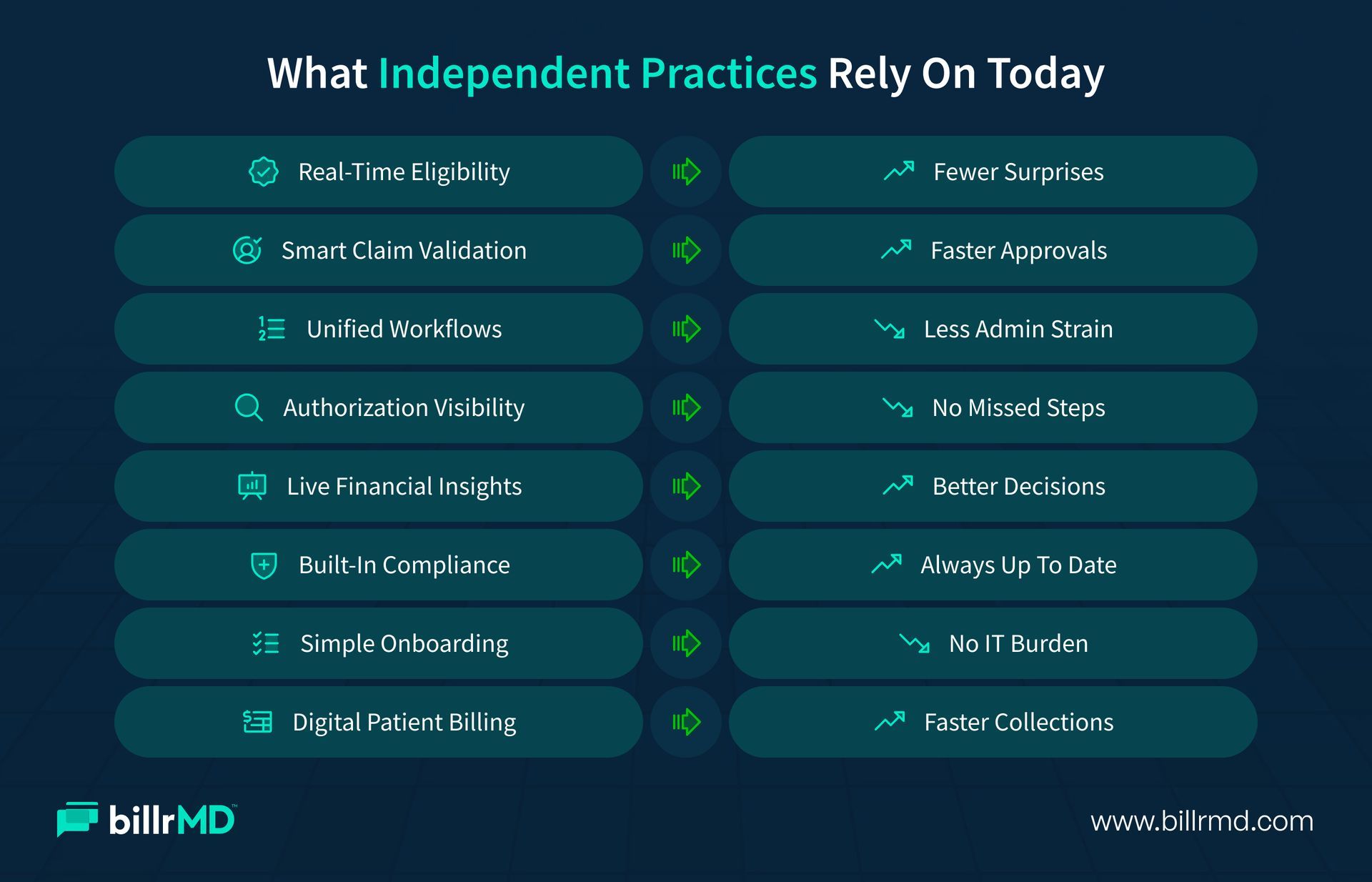
Features such as real-time eligibility verification at the point of scheduling, automatic claim submission with embedded validation tools, and denial coding and reporting by payers and codes are what help prevent problems down the road. For independent practices working with limited staff or an external billing firm, these features are vital to identifying and addressing issues promptly rather than discovering them months later in your accounts receivable aging report.
From the patient perspective, high-deductible health plans have led to a scenario where medical practice management solutions need to be as efficient at collecting payments from patients as they are at handling insurance claims. It is important for practices that want their bills paid on time to embrace online statements, credit card payment facilities, and professional invoices.
What billrMD Brings to Independent Practices
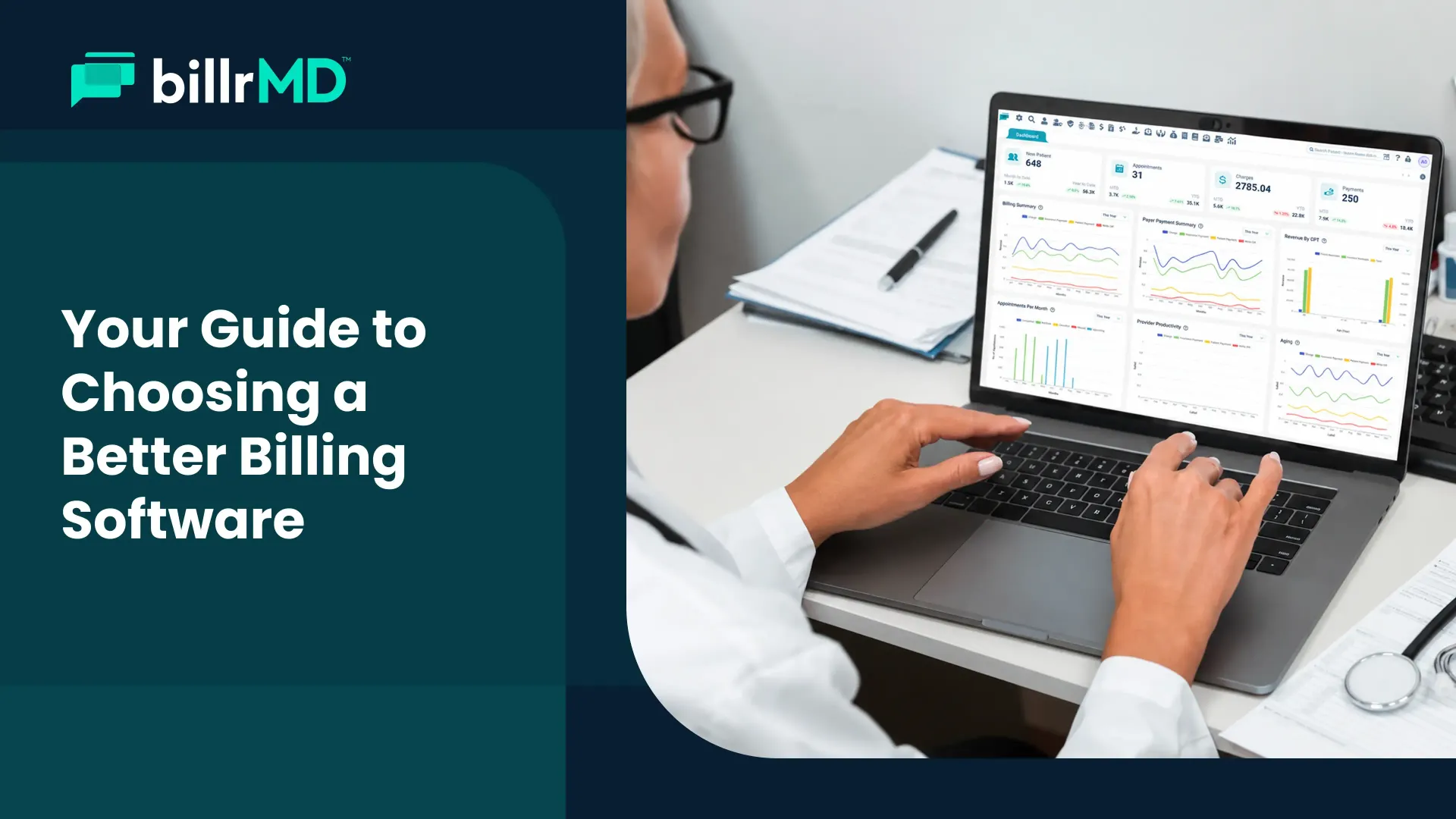
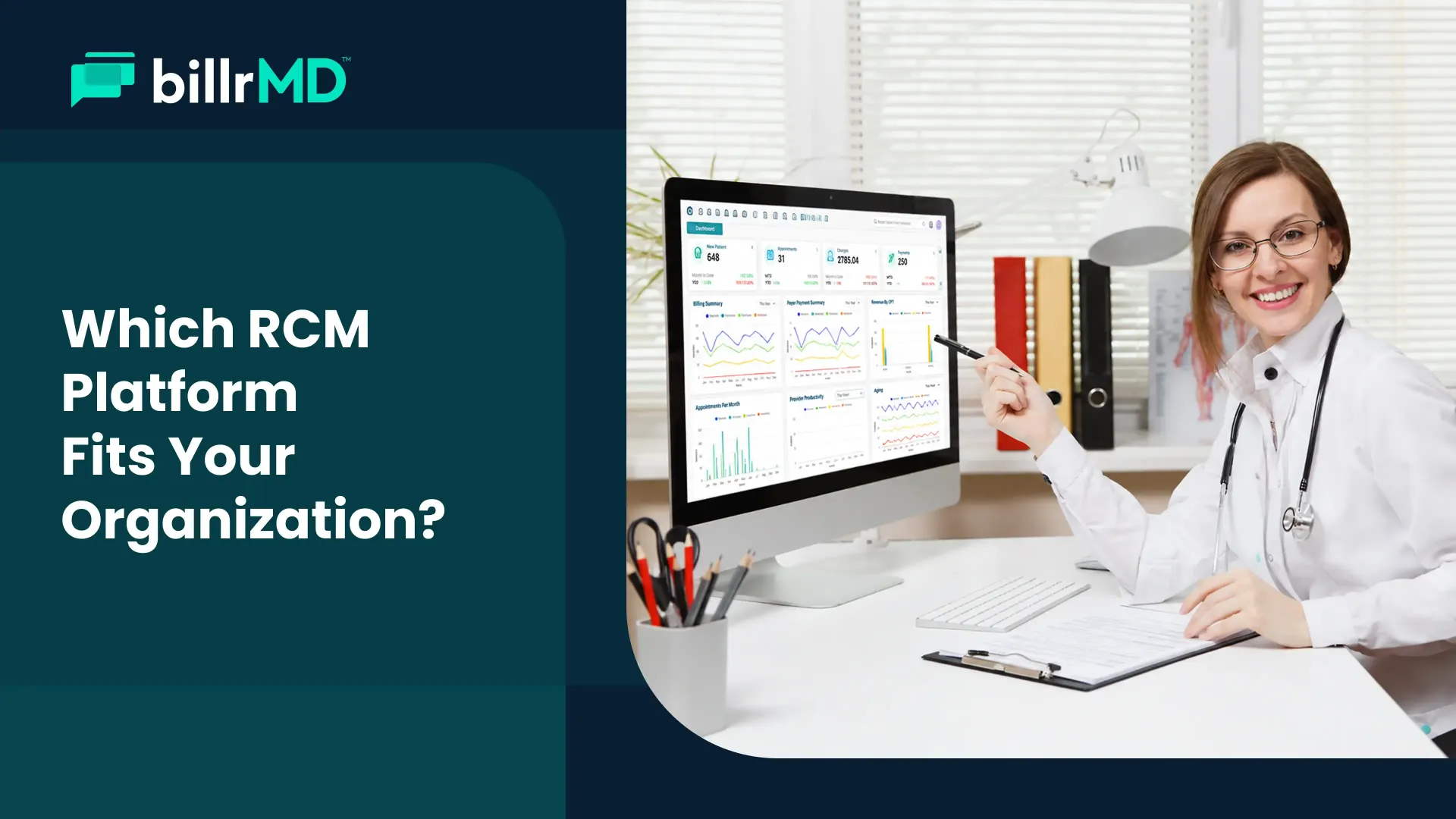
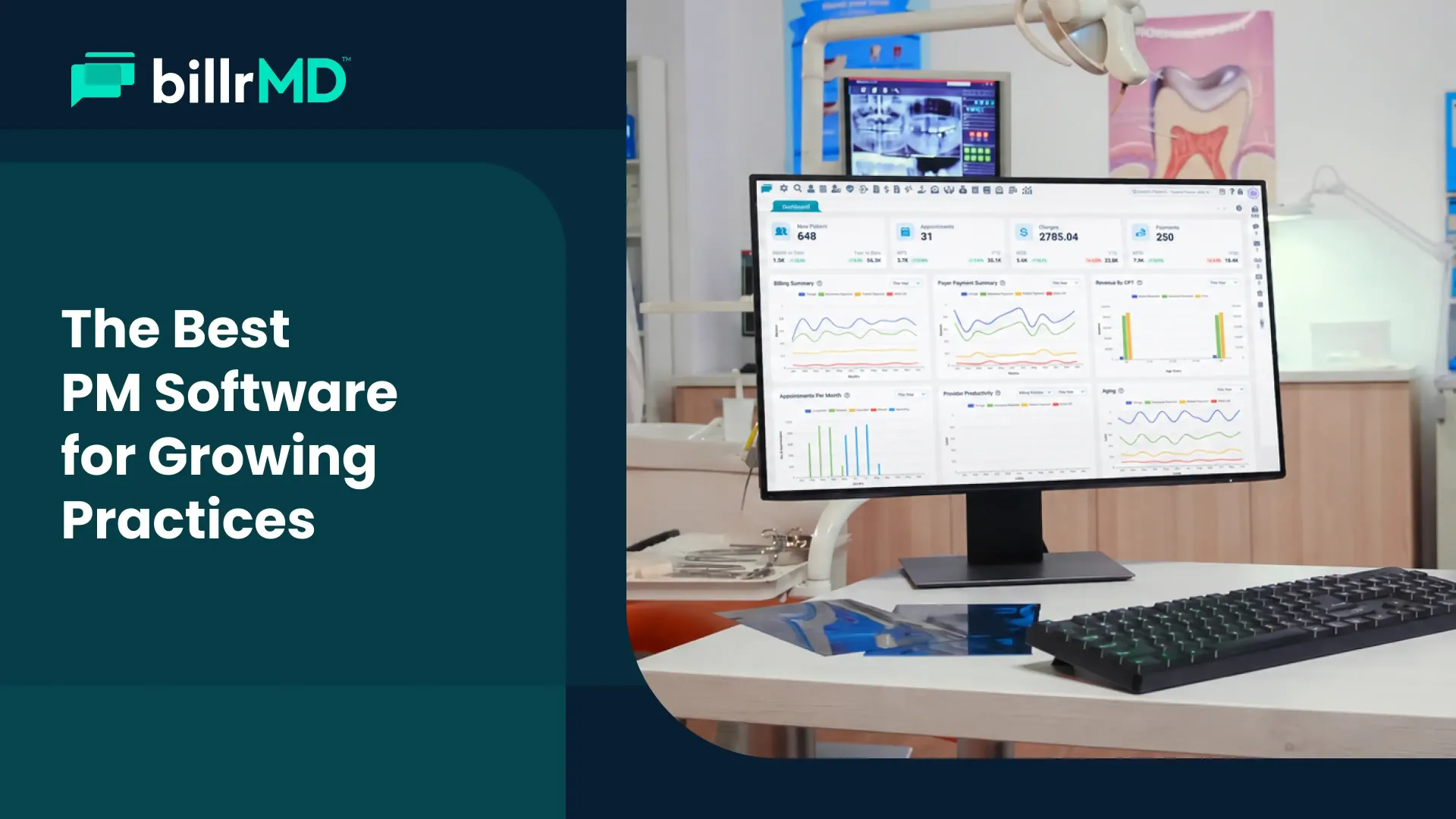
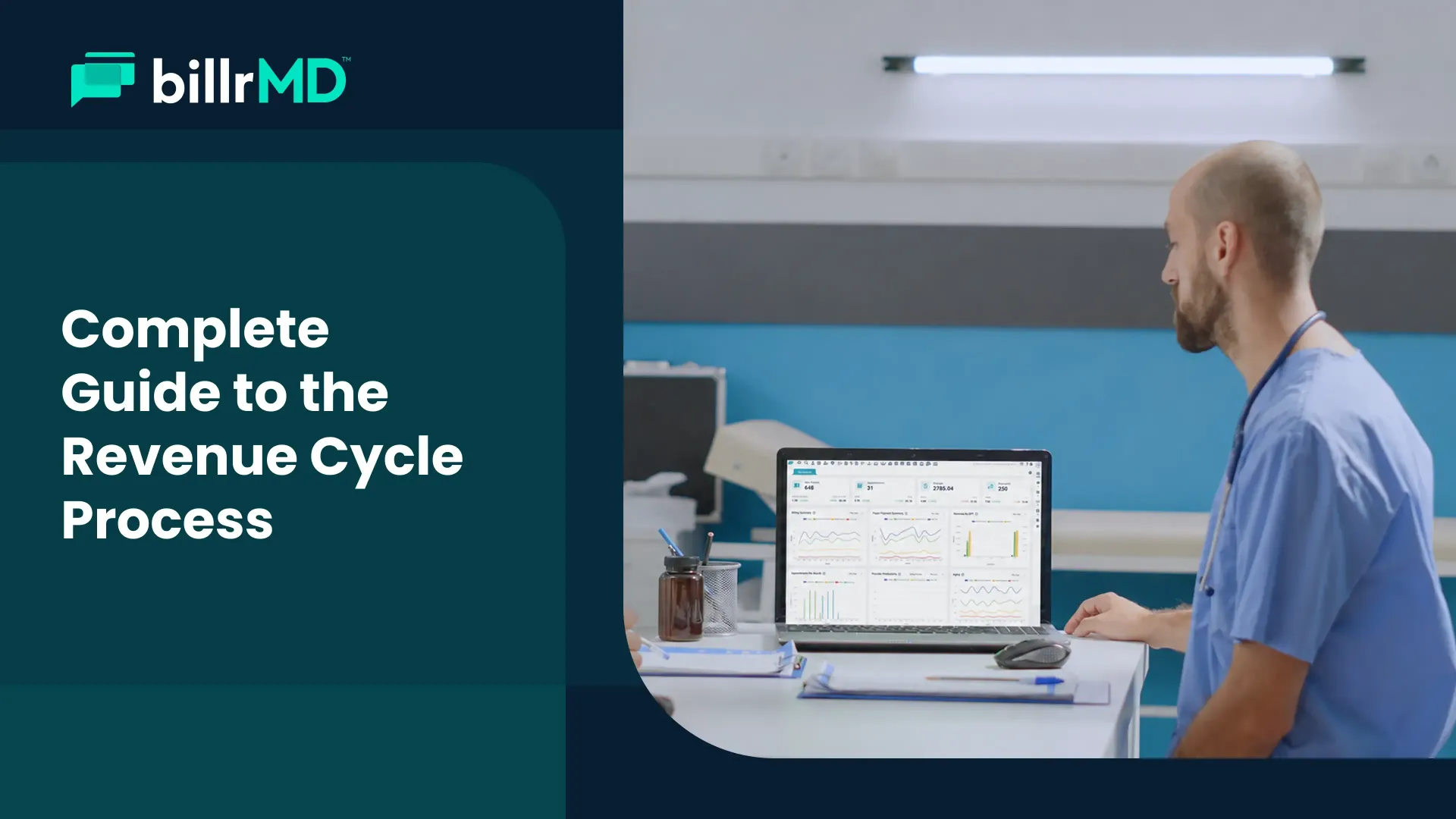
billrMD is a fully web-based healthcare practice management solution built for independent practices, billing companies, and diagnostic facilities that need a complete system without enterprise-level overhead. No installations, no hardware, no IT team required. Scheduling, billing, authorization tracking, patient communications, and financial reporting all live in the same interface, backed by a 99% first-pass acceptance rate, a code library of over 73,000 ICD-10, CPT, and DSM-5 codes, and a denials analysis tool that identifies root causes rather than just surfacing individual rejected claims.
Whether your billing is managed in-house or through an external billing company, both teams work from the same platform, which removes the coordination friction that typically slows collections and creates blind spots in your revenue data.
Simplify Every Billing Workflow
Frequently Asked Questions
What are the biggest challenges facing independent medical practices?
The most common challenges include reimbursement pressure, high claim denial rates, prior authorization delays, insurance eligibility gaps, administrative overload, financial visibility issues, regulatory compliance, and patient collections. These challenges tend to be more acute for independent practices because they operate without the administrative depth that larger health systems rely on.
How do practice management solutions help independent practices?
Medical practice management solutions reduce administrative burden by consolidating scheduling, billing, patient communications, and reporting into a single platform. They automate time-consuming tasks like claim submission and eligibility verification, surface real-time financial data, and reduce the risk of costly coding and billing errors that cost practices revenue every day.
What should independent practices look for in healthcare software?
Look for real-time insurance eligibility verification, clean claim submission with built-in error checking, denial tracking and reporting by code and payer, patient invoicing tools that support multiple delivery methods, and HIPAA compliance. A web-based platform that requires no local installation is especially valuable for practices without dedicated IT support.
Is billrMD suited for small independent practices?
Yes. billrMD is designed to be affordable, scalable, and easy to use without a technical team behind it. There are no downloads, no hardware requirements, and the platform grows with your practice as you add providers, locations, or services over time.
Recent Posts